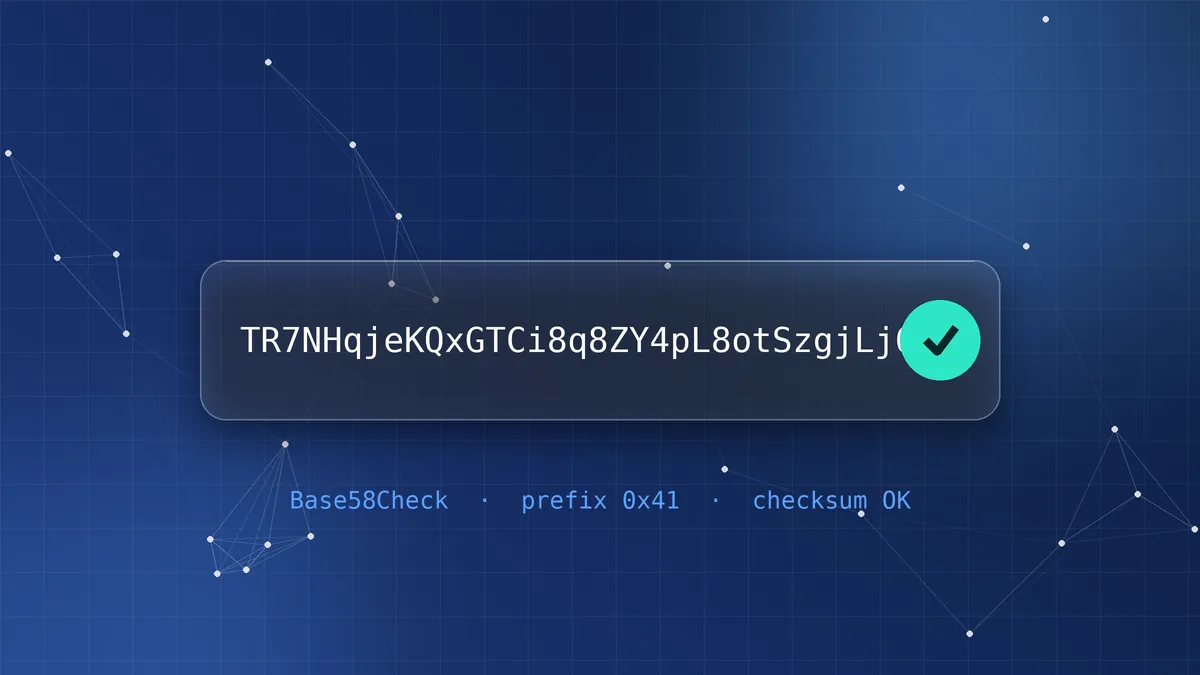
Sending USDT to a mistyped address means losing it forever. A Tron address validator catches typos before you hit send. This guide explains the TRON address format and how to validate a Tron address manually or with our free tool.
Anatomy of a Tron address
- Starts with the letter T.
- Exactly 34 characters long.
- Uses the Base58 alphabet — no
0,O,Iorl. - Encodes 21 bytes: prefix
0x41+ 20-byte account hash, followed by a 4-byte checksum (double SHA-256).
Example of a valid address: TR7NHqjeKQxGTCi8q8ZY4pL8otSzgjLj6t (this is the USDT TRC20 contract).
Why the checksum matters
Because of the 4-byte checksum, a random one-character typo produces an invalid address in more than 99.99 % of cases. Wallets refuse to send to an address that fails the checksum — but not all exchanges' web forms validate it before you confirm, so double-check yourself.
Use the free validator
Our Tron address checker runs entirely in your browser: it decodes Base58, checks the prefix and verifies the checksum, then gives you direct links to Tronscan and OKLink to check balance and history. Nothing is sent to a server.
Validation ≠ safety
A valid address only means the string is well-formed. It says nothing about who owns it. After validation:
- Check the address on Tronscan — does it exist, how old is it, is it blacklisted?
- Run a Tron AML check if you are going to receive from or send a large amount to it.
- Send a small test amount first.
Common mistakes
- Pasting an ERC20 address (starts with
0x) into a TRC20 withdrawal form. - Copying an address from transaction history that was "poisoned" by a look-alike scammer address.
- Trusting a QR code from an untrusted website.